Finland Declines Security Guarantees for Ukraine
Finland has made it clear that it is not in a position to provide Ukraine with formal security guarantees. This decision arises amid ongoing discussions in Europe and with the United States regarding support for Kyiv.
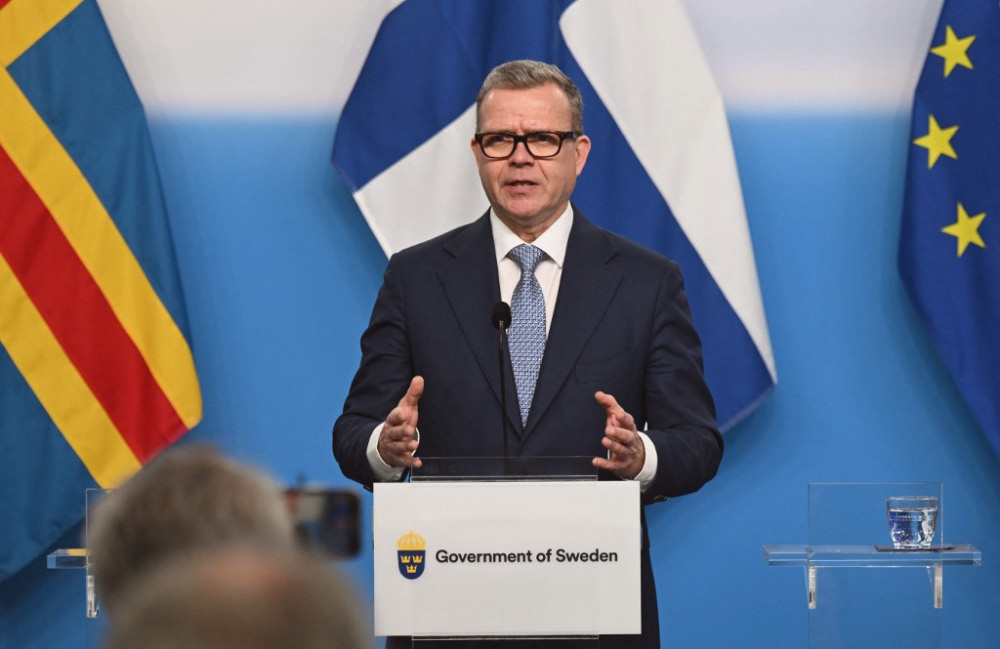
Prime Minister Orpo stated that security guarantees and agreements are "very different things." According to Finnish broadcaster Yle, he emphasized that Finland is not planning to offer security guarantees to Ukraine but is ready to participate in security agreements.
When asked whether Finland had received details about the guarantees proposed by the United States similar to NATO's Article 5, Orpo responded that Helsinki had not seen any concrete proposals, stressing the significant difference between security guarantees and broader agreements. Finland was mentioned as a potential security guarantor in the initial 28-point peace plan from Washington.
"We have had no discussions on this matter. I do not understand why Finland was included in this document. Security guarantees are extremely serious commitments. We are not ready to provide them, but we can assist within the framework of security agreements. The difference is colossal," Orpo stated.
He added that decisions on security guarantees would ultimately be made by leading European countries and the United States. Swedish Prime Minister Ulf Kristersson remarked that European nations are preparing to support Ukraine's security through military training and arms supplies while cautioning that recent discussions about guarantees may be misleading. He noted that the strongest guarantee remains a robust Ukrainian army, and "we can help it stay strong."
Finnish President Alexander Stubb made a separate statement. In an interview with MTV Uutiset, he mentioned that the conditions for a "just peace" in Ukraine are unlikely to be met.
"The reality is that peace can be good, bad, or compromised. And the reality is also that we, Finns, must prepare for the moment when peace arrives, and that all the conditions for a just peace that we have spoken about for the last four years are unlikely to be fulfilled," Stubb said. He added that "today we are closer to peace than yesterday," but the upcoming days and weeks will show whether negotiations yield results.
His statement came after nearly five hours of discussions between U.S. special representatives Steve Witkoff and Jared Kushner with Russian President Vladimir Putin on Tuesday evening, which yielded no progress. Instead, Putin accused Europe of obstructing peace negotiations, stating, "We do not plan to fight Europe, but if Europe decides to start a war, we are ready now."
The 28-point plan prepared by Witkoff and Russian negotiator Kirill Dmitriev has been criticized by European and Ukrainian officials as being advantageous to Moscow. In the updated version, some provisions were later removed.
Finnish Foreign Minister Elina Valtonen stated at the NATO Ministerial meeting that Europe will soon be informed about the progress of peace negotiations, although she noted that "obviously, last night in Moscow there was no broad consensus reached."
"Russia is not prepared to make any compromises," she said, adding that any settlement must stop the killings and ensure that Ukraine is strong enough to withstand future incursions and political interference.
It remains unclear what the long-term security commitments to Ukraine might look like if the diplomatic process progresses and whether they will be sufficient to deter a new Russian attack. Western governments continue to emphasize strengthening Ukraine's military capabilities but are avoiding commitments that would involve deploying their own troops.